Concentra
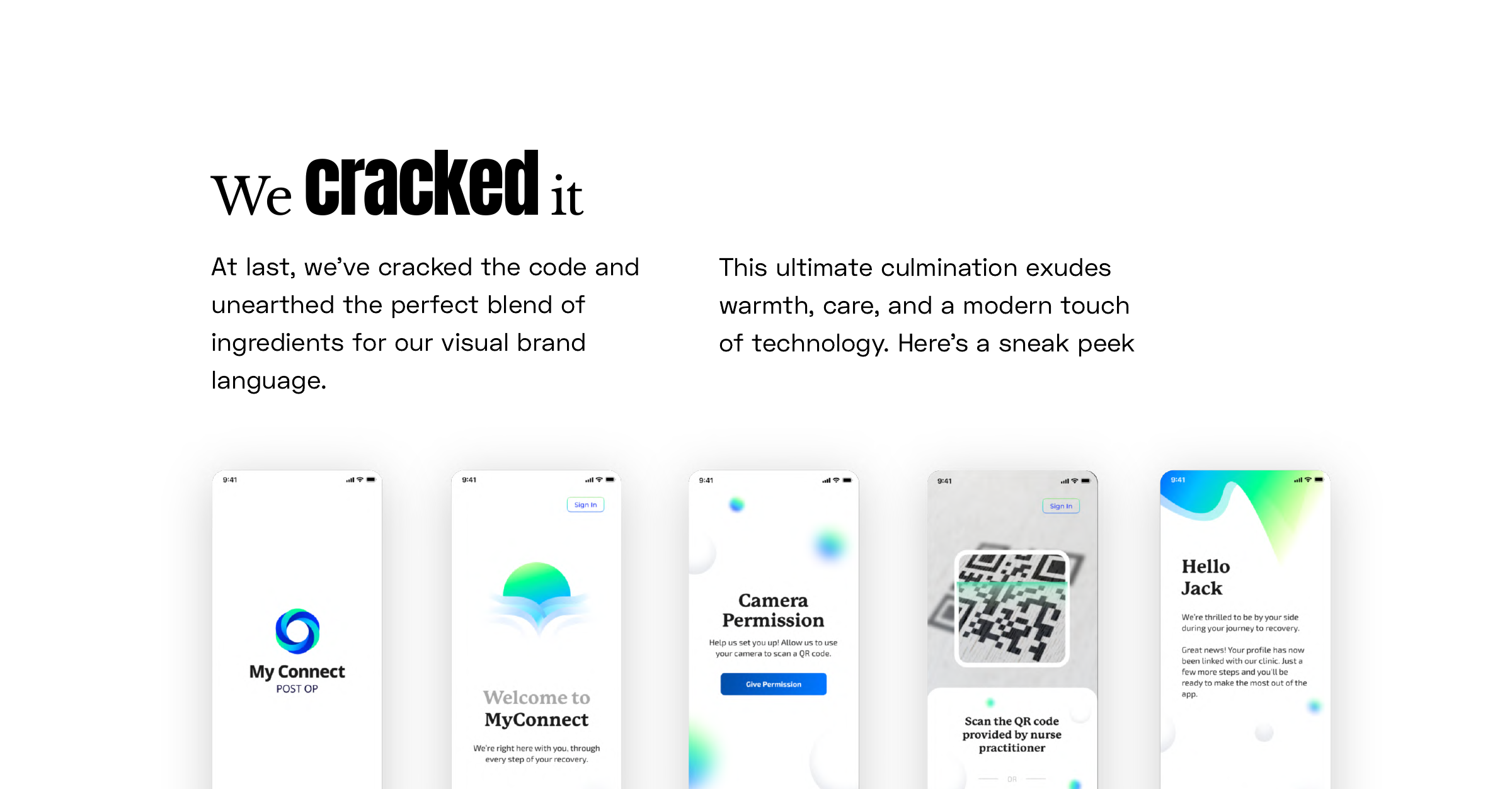
I led an AI post-op rehabilitation platform from strategy through ship, owning the AI model choice, the guardrails, FDA and SaMD-compliant design, and the UX that makes clinical AI trustworthy. We delivered a patient mobile app, provider web and native apps, and a full design system in eight months. Client: Concentra AI (USA). Tools: Figma, Miro, Lottie, Principle.
The problem
In the US, opioids account for roughly 75% of drug-abuse deaths, and post-operative recovery is a major on-ramp to dependency. Almost no modern technology addressed prevention during the recovery window itself. Concentra AI wanted app-based Cognitive Behavioral Therapy (CBT) to reduce post-op opioid dependency, and a path to FDA approval.
Research surfaced a two-sided breakdown. Patients lose contact with providers after discharge, have no reliable point of contact, and move through recovery uninformed, which drives opioid overuse. Providers cannot monitor every patient daily, lean on overstretched nurses, and have little visibility into recovery outside emergencies.
Designing inside hard constraints
This was a regulated, high-stakes product, so the strategy was as much about judgment and safety as features. Human judgment stayed non-negotiable: automated drug management carries real risk, so the design kept clinicians in the loop instead of automating medical decisions. FDA approval as a goal meant the therapy approach had to be objective and defensible. Sensitive areas like prescription provision and pain tracking were deliberately constrained, because they are subjective and high-risk.
The AI product decisions
This is where the work was AI design, not AI decoration.
Model selection
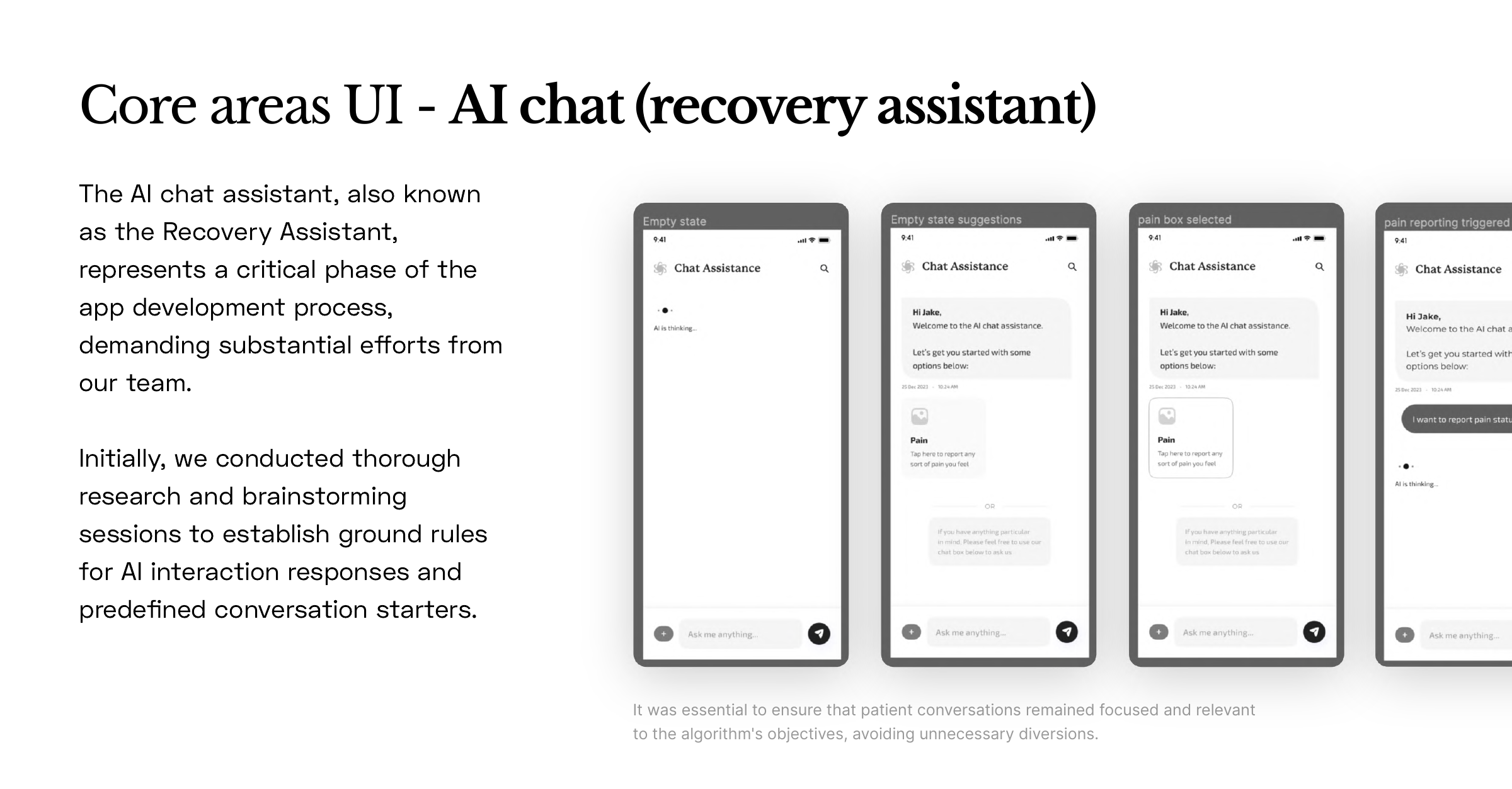
I evaluated ChatGPT against Google Bard for the brief, then chose and tuned ChatGPT for a more humane, concise patient-assistance experience. A build-versus-tune call driven by the use case, not the hype.
AI guardrails
I defined guardrails so the assistant operated within a confidence interval, with human-in-the-loop review and clear escalation. That is the core of a trustworthy clinical AI experience.
Compliance as a design input
I researched FDA Software-as-a-Medical-Device (SaMD) rules alongside Apple App Store and Google Open Health Stack guidelines, and worked with the client's attorney on the legal pipeline: state licensing, opioid-prescription rules, telehealth limits, and AI data handling. Front-loading compliance cut risk and rework later in the build.
Device integration
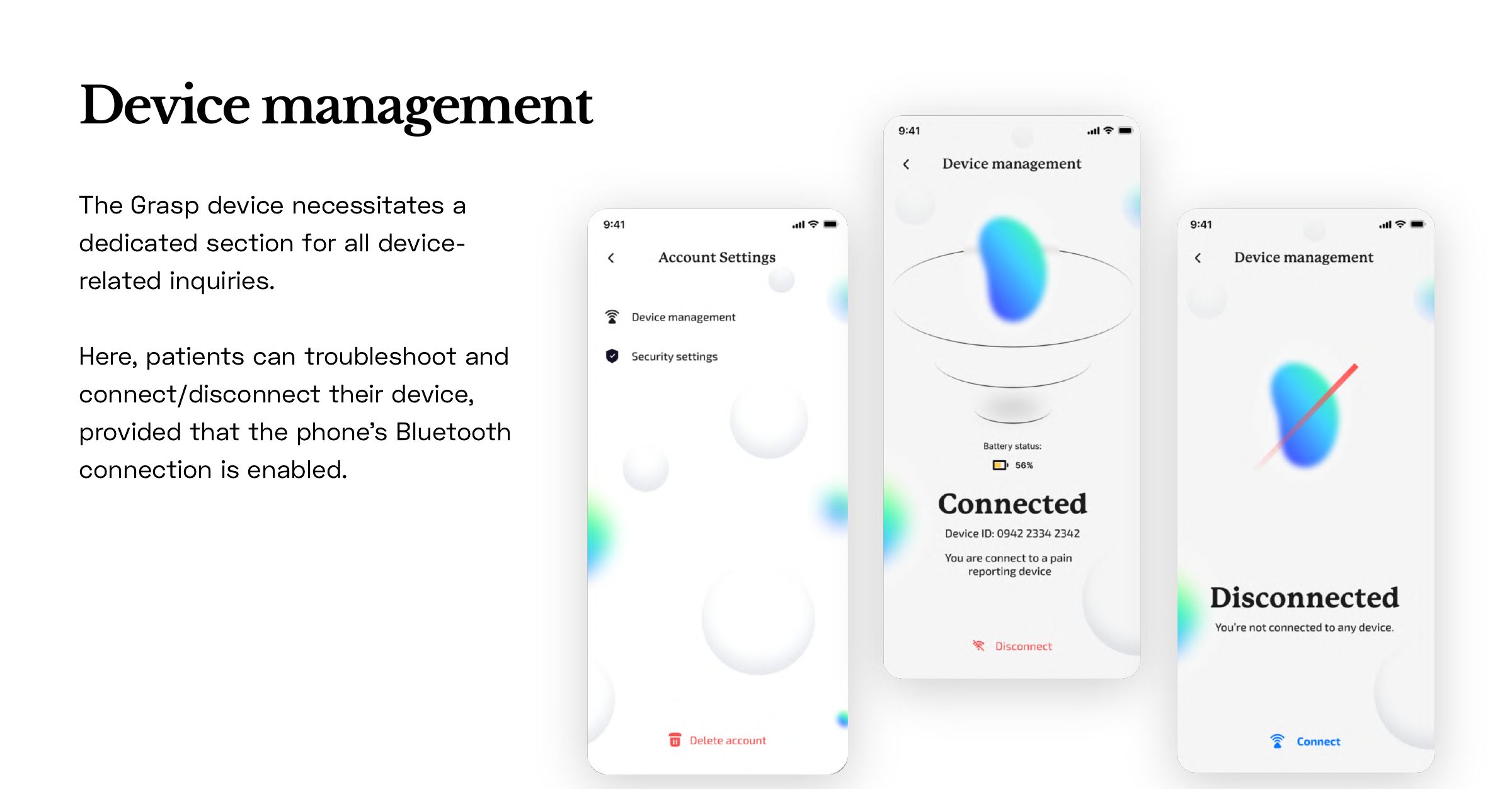
I mapped a partnership with the Norwegian startup Grasp and its patented device, including a pain-severity input (light, medium, severe via squeeze, surfaced as green, yellow, red) into the patient-monitoring and insights model.
The design
A patient mobile app delivering CBT, a reliable point of contact, and recovery guidance. A provider web and native platform to manage patients and surface surgical and recovery insights. A full design-system library under both, built for scale and clean handoff.
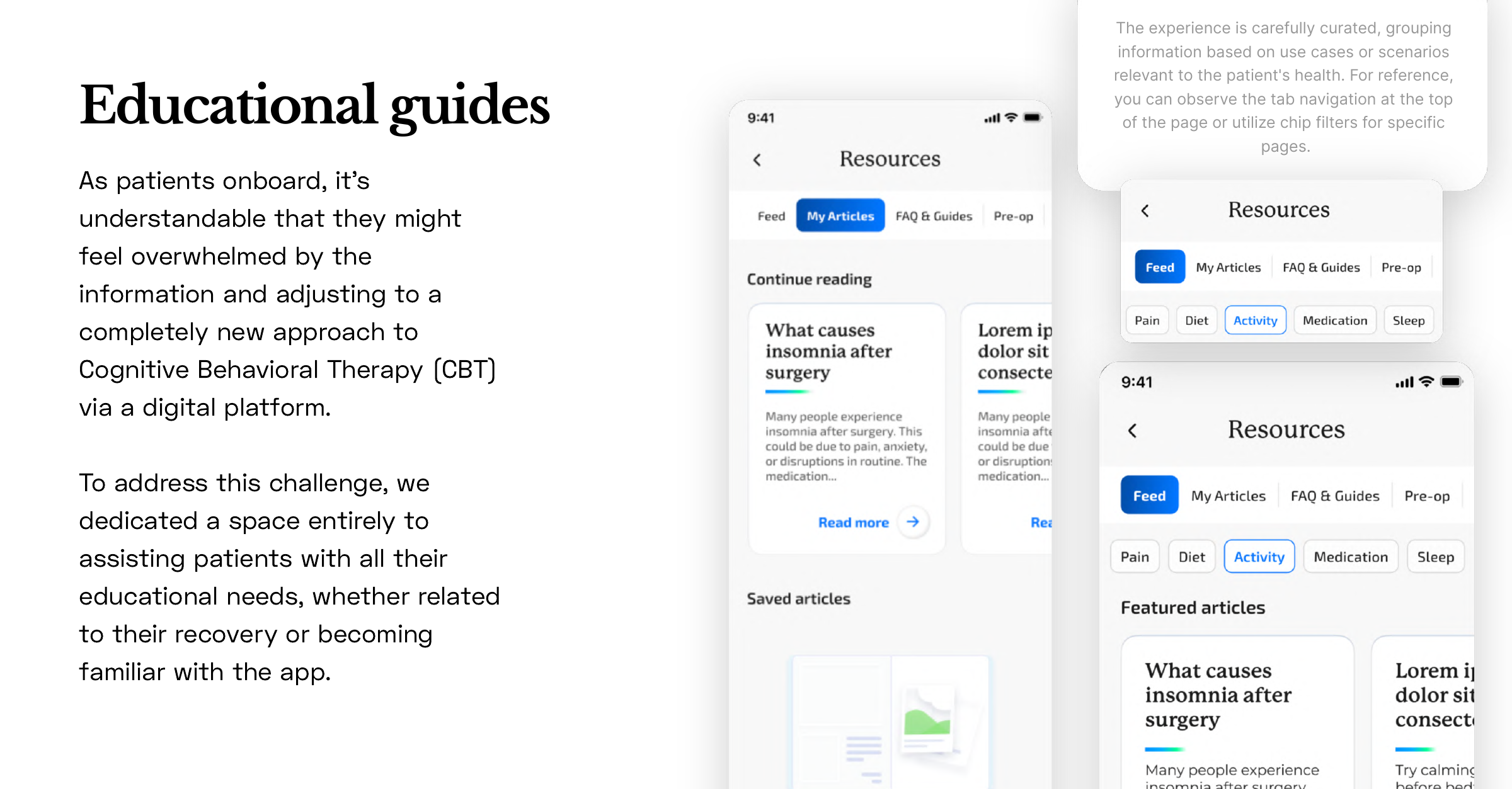
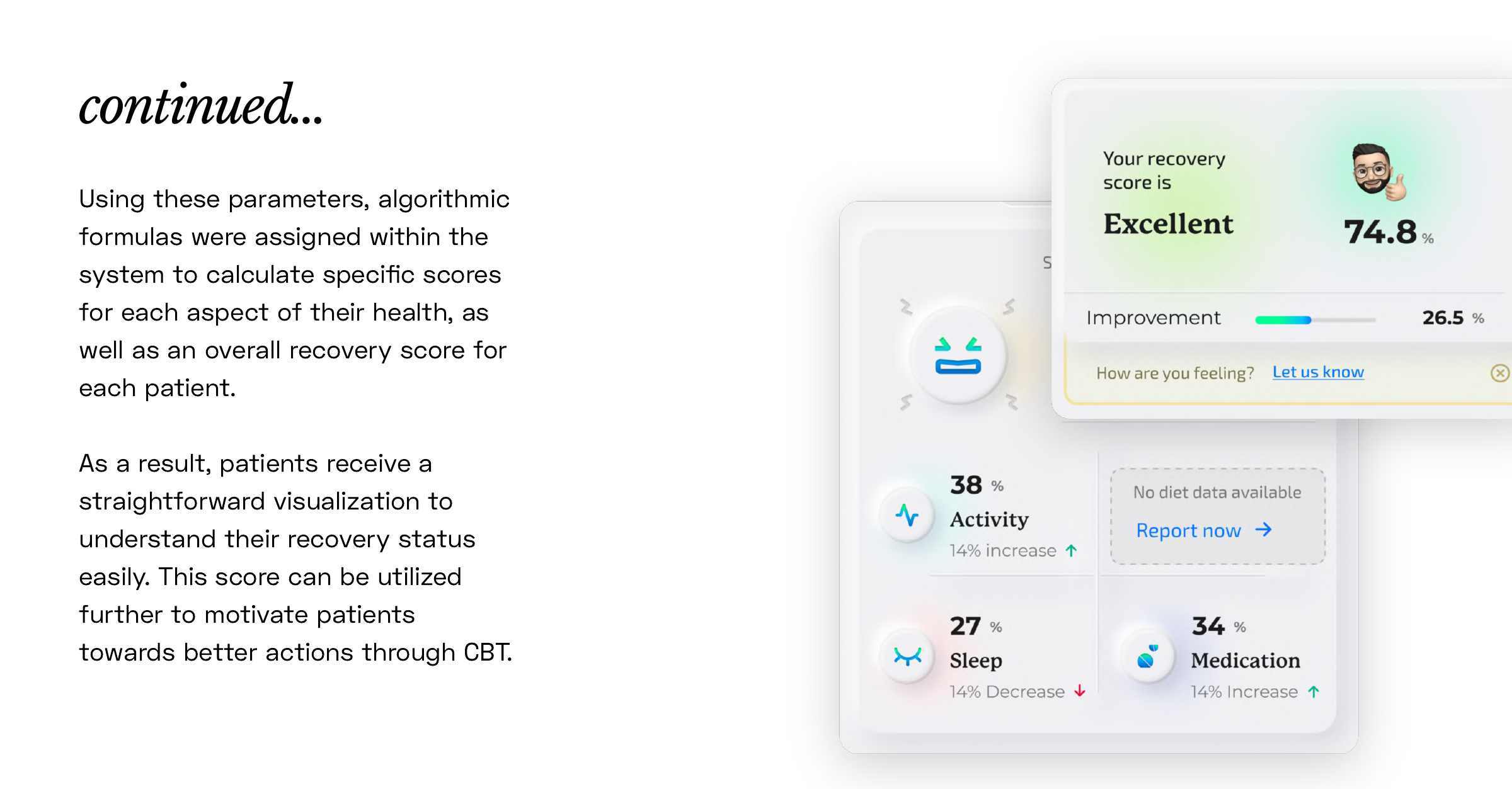
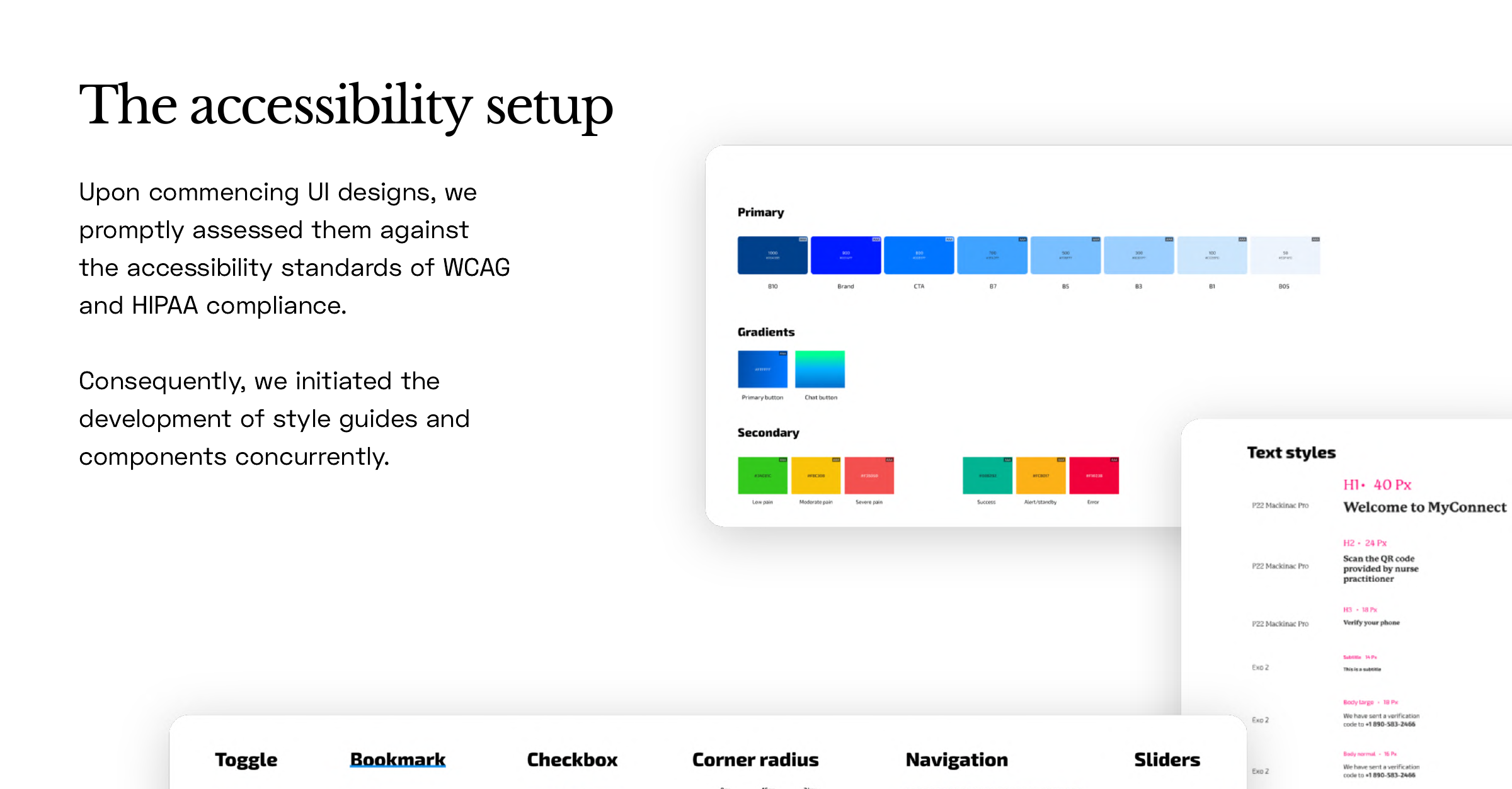
The method: affinity mapping from client calls, empathy maps and journeys for every stakeholder, card-sorting for the information architecture, and high-fidelity wireframes over four passes, with particular rigor on the AI chat experience. Accessibility was assessed against WCAG and HIPAA from the start, with the style guide and components built alongside the UI.
The outcome
We shipped the patient app, the provider apps, and the design system in a rigorous eight-month window: a compliant, human-in-the-loop AI product moving toward FDA approval, built by a small team where I owned design end to end and drove the AI product decisions. The app entered production with an alpha rollout for the pilot, and major US healthcare players expressed interest.
I do not decorate AI products. I shape them: model choice, guardrails, compliance, and the UX that makes clinical AI trustworthy. And I ship.